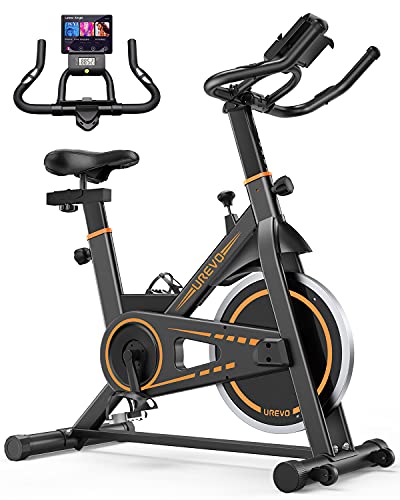
Why Riding a Stationary Bicycle Is a Good Idea
It's easy to become stuck in a rut of exercise by using the same cardio machines each time you go to the gym. Try cycling on a stationary bike for a challenging exercise that will work multiple muscles.
The gluteal muscles are involved in the first phase of pedal strokes when you press down on the pedals. The quads are also important in the downward motion of pedal strokes.
Cardiovascular Fitness
If you're looking to lose weight or increase your endurance, stationary bike exercise can aid. It's a great choice for those who suffer from back issues because it's not as demanding on the spine as other aerobic exercises. However, it's important to increase your cardiovascular fitness gradually. Trying to push yourself too hard could lead to burnout or injury.
Regular cycling can boost your cardiovascular health and increase your aerobic capacity. This is due to the fact that it lowers your blood pressure when you exercise and at rest, which reduces your chances of developing cardiovascular diseases like hypertension, diabetes, and high blood sugar. Exercise biking also reduces your heart rate at rest which allows your body to take in more oxygen per beat and increases your energy levels.
Stationary bike exercise works several muscles in your legs, hips butt and core. our website targets your hamstrings and gastrocnemius along with your quads. The hip flexors, iliacus, and psoas (which are all referred to as the iliopsoas), contract during the pedal stroke when your leg straightens. This pushes you forward. They then contract again when your foot presses on the pedal. The calf muscles are activated just before you reach the end of the pedal stroke to assist dorsiflex your ankle, which means pointing your toe towards the downwards.
A stationary bike workout could be a long-running session at moderate, low or high intensity levels. You can simulate hill climbs even by increasing your resistance. Interval training with stationary bikes can improve your cardio performance. You will burn more calories in less time.
A stationary bike can burn as much as 600 calories per hour, depending on the intensity and length of workout. This can help you shed weight, especially when your diet is well-controlled and you aren't eating too much carbohydrates. It can also help you reduce your waist circumference as well as improve your metabolic profile, which is a good thing for people who have type 2 diabetes or are at risk of developing heart disease.
Strengthening
Riding a stationary bike is a great way to build muscle and tone muscles without putting stress on the joints. Contrary to running or other high-impact exercises, cycling workouts are safe for people with arthritis as well as other chronic conditions that can cause joint stiffness and pain. Cycling is an aerobic low-impact activity that improves the cardiovascular health.
Stationary bike exercises build muscle in your legs and butt, as well as your shoulders, core and arms. In addition to the quadriceps muscle which runs along the front of your thigh, the bike workout strengthens your gluteal muscles and the calves, which run along the back of your lower leg from your knee to your ankle.
When you pedal on a stationary bike, it is a great way to strengthen your core muscles as well as you attempt to maintain your balance and control of the pedals and handlebars. This is especially important when you ride a bike with a low-slung seat because it requires you to use your back and abdominal muscles to keep your balance on the bike.
Cycling exercises focus on the muscles of your upper body, such as your shoulders and triceps muscles, your hip and leg muscles are the main exercise focus. The quadriceps muscle, which is located at the front of the thigh is responsible for 39 percent of the power that is generated when you pedal. our website , which comprises the large, medium, and small gluteal muscle located in your buttocks, accounts for 27 percent of your pedaling force. The hamstrings at the back of your leg account for 10 percent of your pedaling power.
In addition cycling regularly stimulates the production of synovial fluid which provides lubrication and protection to joints in your knees, hips and ankles. These benefits, when combined with the strengthening of your core and leg muscles through cycling, can help relieve pressure on your hips and knees caused by arthritis.
Researchers found in a 2021 study published in Clinical Rehabilitation that people with knee arthritis who cycled as a regular exercise had more balance, less pain and less disease activity than those who walked on treadmills. The difference may be due to the fact that biking utilizes your leg muscles to balance while walking requires stable weight-bearing with both feet on the ground.
Fat Burning
In addition to improving cardiovascular fitness and decreasing the risk of heart disease, stationary bike exercise can help burn off significant calories. The amount of calories burned is contingent on how long and hard you ride, and also the amount of effort exerted. A typical 60-minute session of moderate intensity riding produces about 300 calories. To maximize the benefit of your workout, consider building up to a higher intensity effort, such as interval training.
The gluteal muscles, including the hip flexors along with the quadriceps muscles as well as hamstrings are targeted by stationary bicycle exercises. The hamstrings consist of three muscles that extend from your pelvis to your knees. Hamstrings are involved in extending the leg as you pedal forward. The hip flexors are a collection of muscles that are located in the area between your hips and pelvis. They help you flex your leg. These muscles are also worked when you pedal with your feet off the ground.
You can do an intense exercise on a stationary bicycle using an interval-training routine, such as Fartlek, which combines short bursts of intense pedaling, followed by longer periods of less intense. Begin with a five-minute warmup and a 10-minute cooling down on your stationary bicycle.
Another method to increase the fat-burning effects of a stationary cycling workout is to vary your speed and cadence. This will target your legs and core muscles while also requiring you to remain engaged and focused. You can utilize a heart rate monitor to monitor your progress and set goals for yourself.
You'll feel more energized after a cycling session because your body releases dopamine. It also boosts your metabolism so you are more likely to keep your weight loss once you've reached your goal.
If you're just beginning to exercise begin with a gentle bike ride, and gradually increase your duration and intensity. If you suffer from joint pain that is chronic, talk to your doctor prior to beginning an exercise regimen that includes a stationary bicycle.
Flexibility
In addition to strengthening muscles, stationary biking can help stretch and elongate your body's muscles. This is crucial to avoid muscle and joint injuries, and also to perform actions like swinging a club or pitching the ball with ease. Flexibility training is often incorporated with other exercises, for example endurance and strength training, but can also be used on its own.
A bike ride that is stationary can range from just a few minutes to several hours, based on your fitness and goals for your health. If you're just getting started and are just beginning, you should ride for 30 minutes every day and slowly build up your endurance over time. If you're training for high-intensity intervals, however, you may require more time on the bike.
The stationary bike is a well-loved exercise machine for all ages and fitness levels. It is a popular choice for those who are looking to improve their fitness levels as well as those recovering from injuries and athletes who are training for a race. There are many kinds of exercise bikes available on market each with its own distinct advantages.
The most common stationary bikes include recumbent, upright, and spin bikes. The upright bike is the most common type of exercise bike. It resembles an outdoor bicycle. The recumbent bike, on the other hand is designed to be more comfortable for those who suffer from back pain or neck pain. Spin bikes are a different type of exercise bike found in gyms. They are usually utilized for intense spinning classes. The seat is further back on the spin bike than other stationary bikes. It can also be adjusted to fit different sizes.
our website can be a great way to work all of your body including your back muscles, shoulders and triceps. It also targets your core muscles and when you're using an incline feature of the stationary bike, it will use additional muscles in your legs to push up against the force of the gradient. The hip muscles, like the gluteus maximus, can also be targeted when you exercise on a stationary bike.